

Do you want to learn English on your own at home, but don’t know how?
You have come to the right place.
I am learning English by myself. I do not teach in the classroom.
You can learn at home!
And if you want to learn to speak English, you can do it at home. (I’ll tell you in this guide.)
Why learn English at home?
If you want to improve your English, you have two options.
You can A) take English lessons near you or B) study on your own at home.
For me, studying at home is better than in class.
Here’s why:
1. Comfortable

If you learn English at home, you can learn it right after you wake up in the morning.
You don’t need to shower, get dressed, or make yourself look good. You can learn English in the comfort of your pajamas.
No need to go to class. All the English materials you need are available online. (You can find unlimited learning material on YouTube alone.)
2. Consistency
If you want to improve your English, you need to spend a lot of time every day listening, reading and practicing English.
This is not easy to do if you believe in classroom learning.
Imagine having to go to class every day. It would be too time consuming and expensive!

But if you learn from home, it’s easier to be consistent because you don’t have to waste time traveling to and from class.
Don’t get me wrong. It is better to take English lessons. But if you go to class a few times a week and do nothing else, your progress will be slow. Therefore, if you want to catch up quickly, you should learn English at home on non-school days.
3 best ways to learn English at home
There are different ways to learn English at home.
Rather than discuss them all, let me share the best ones.
I use the following criteria to choose the best learning activity:
- They should be convenient and easy to perform. (You can do it alone at home without relying on the teacher or other people.)
- They should be proved to be effective. (Everyone agrees that they are useful.)
Based on these criteria, the three best actions for you are:
1. Listen to interviews in English

Listening is probably the most important learning activity you can do.
In order to learn your mother tongue as a child, first of all you need to listen to your parents.
By listening, you have learned grammar, vocabulary and pronunciation of your first language.
If you want to learn English fast, you need to listen to English a lot!
What content in English should you listen to?
Personally, I listen to what I like.
For example, lately I’ve been listening to Harry Potter theories on YouTube. (Harry Potter is my favorite book and movie series.)

I also listen to horror/horror stories. I usually listen to these stories while working out at my gym. (It makes my workout even more fun.)

I listen with wireless headphones (very cheap these days) connected via Bluetooth to my phone. This makes it easier to listen to English while practicing.
What are your interests or passions? What do you find interesting?
Subscribe to English YouTube channels (or podcasts) based on these interests. It’s a great way to learn English and have fun in the process.
2. Study in English

If your listening skills are weak, reading is a great “extra” activity.
In fact, listening and reading together is the most powerful way to improve your vocabulary and comprehension. (You will learn both pronunciation and spelling of English vocabulary.)
What to study in English?
Read books on topics that interest you.
To give you some ideas, the types of books I like are:
- Fantasy novels (eg Harry Potter series)
- Nonfiction books based on my interests (health, diet, investing, self-improvement, skill development)
- Best selling books in general
Even if your goal is to learn English, you can benefit from reading.
For example, when reading a novel, you can read dialogues between characters. These dialogues contain words and phrases used in spoken English.
“Yes, that’s right, clever depend on him, Malfoy Ron said angrily. “I’m sure Krum can look right through he though… he gets people rash he always… Where have you been calculation are they sleeping We can offer him a place in the dorms, Harry… I don’t mind giving him my bed, I can kip on a camp bed.’
Harry Potter and the Goblet of Fire
I have read each of the seven Harry Potter books multiple times. But every time I reread it, I still learn new vocabulary.
What if you don’t have a big budget to buy English books?
Here are some solutions:
- Buy used books in English for cheap through Facebook groups or online marketplaces
- If you live near a public library, get books in English from there
- Read blogs in English instead
Don’t let lack of money stop you from learning English.
3. Learn to speak English
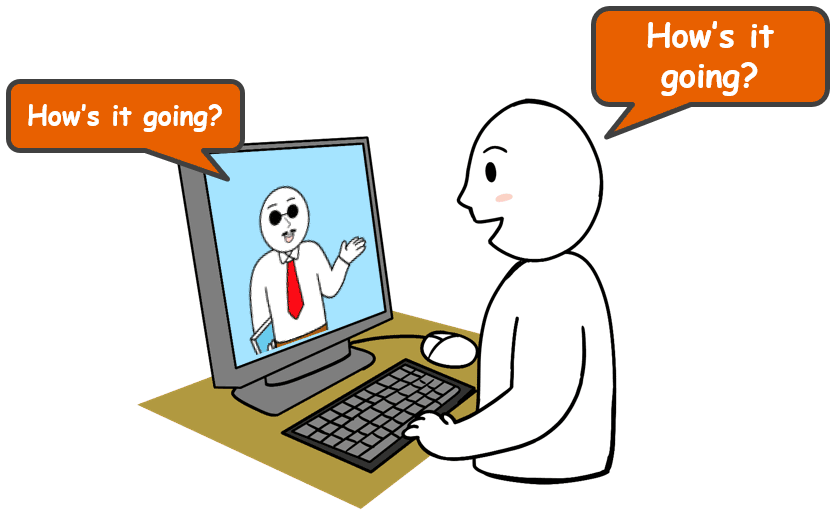
Good listening and reading skills don’t seem to be enough these days.
You need good English speaking skills to stand out.
But here is the question: how to learn English at home?
You need a partner to learn to speak, don’t you?
Well, not really.
Believe it or not, there are ways to learn English alone without a partner.
My favorite speaking exercise is called Imitation. Basically, you listen to a conversation in English and imitate (copy) the speaker.
By imitating native speakers, you will learn to speak English with correct grammar and pronunciation.
I have been practicing this method for years and I can tell you that it works.
All you need is material in English (video or audio files with English interviews or monologues), which can be found for free on the Internet.
If you want to know the step-by-step process of this exercise, read my English Speaking Practice Guide.
Yes, you can improve your English speaking skills at home. It is absolutely possible. I and many others have done this.
3 tips to make learning English at home a success

Although learning English at home is convenient, it has some disadvantages.
There’s no one to guide you or tell you what to do or make sure you’re actually learning English (instead of doing something else).
Here are some tips for success:
Tip 1: Keep your study routine simple
If you GoogleHow to learn English at home,” you will find many suggestions and ideas on how to do this.
Unfortunately, some of them are not practical or realistic:
But in this guide, I only recommend three activities (listening, reading, and practicing) instead of 9 or 10 suggestions like in other articles.
Why is this?
This is because the more complicated your study routine (the more things you have to do), the more confused and confused you will become.
So I do only three things every day:
- Listening to interesting content in English (while eating/exercising)
- Read interesting books in English (before bed and during the journey)
- Learn to speak English alone (first thing in the morning)

I sincerely believe that this study routine is enough to improve your English. You don’t need to make it more complicated or fancy.
I don’t study grammar. I don’t use language learning apps. I don’t spend time watching random English lessons on YouTube. I don’t actively try to memorize new vocabulary words.
If you keep your routine simple, it’s easy to be consistent and your English will improve quickly.
Tip 2: Make learning English fun

The biggest challenge with homeschooling is that it’s easy to procrastinate.
There is no one at home to hold you accountable. Instead of learning English, you can do whatever you want. You can play video games, browse social networks or watch TV.
If you have poor discipline, this is one way to overcome the challenge Make learning English a fun and exciting experience.
Check out these fun things to do at home. Can these activities be done in English?
For example, I like to read fantasy novels. But instead of reading the translated version, I read the original, the English version.
I also like listening to movie reviews to see which new movies are worth checking out. But instead of subscribing to Thai movie review channels on YouTube, I follow English channels.
Last example: I love listening to scary stories. There are YouTube channels sharing these stories in Thai (my native language) and English. I only subscribe to English channels so I can have fun and learn English at the same time.

Do you get the idea?
When you make learning a fun experience, it no longer feels like a boring chore you have to do. There is no reason to delay now.
Tip 3: Don’t confuse reading with research

A common mistake students make is to believe they are “learning” English while “researching” how to learn English.
They spend a lot of time watching videos or reading articles on how to learn English. They continue to learn about new ideas, methods, tips and techniques.
The problem is this is NOT learning. This is research!
It is important to distinguish between two actions:
Research: Search “best books to read in English” on Google.
Reading: read a book in English
Research: Search for “best podcasts for English students”.
Reading: Listening to a conversation in English.
Research: Watch the video “10 tips to improve your English speaking”.
Reading: Open your mouth and speak English.
As you can see, they are not the same.
Why do people spend so much time researching?
If students spend more time studying than learning English, it is because of the following reasons:
- They don’t really want to learn English (because it’s hard work), so they “procrastinate” by passively consuming content on how to learn English. And they convince themselves that they are doing something productive. (Actually, they’re a waste of time.)
- They think that activities such as reading, listening and speaking practice are too boring or too time-consuming. So they look for a shortcut: a secret way to learn English fast. (Unfortunately, they are not shortcuts. Learning English takes time. There is no way around it.)
- They are perfectionists who are not ready to start anything until they have all the information. They should know all the tips, tricks and methods of learning English before taking the first step.
Don’t fall into this trap.
In fact, you don’t need to know everything to get started. If you’ve been reading English learning tips for a while, you probably know everything you need to know to succeed.
It’s a good idea to do your research and find ways to learn English more effectively at home (which you’re doing right now by reading this article). But it shouldn’t take up much of your time.
Spend more time studying than researching.
Thanks for reading. If you follow the tips on this page, I guarantee that your English will improve.
Don’t forget to bookmark this page. When learning English at home, if you are having trouble or are having trouble, go back and read this article again.